Coding Projects #
Productivity #
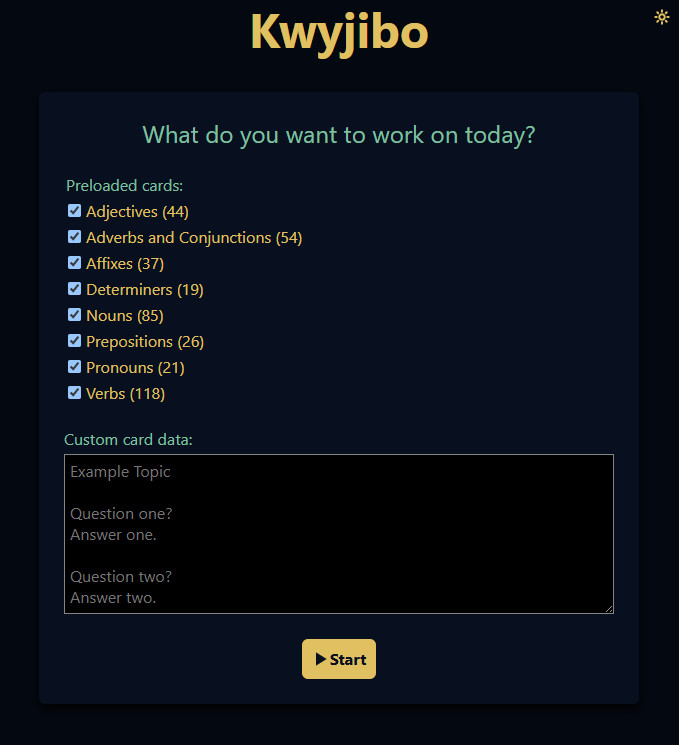 Kwyjibo
This is my latest app in development, and I have big plans for it. So far, it’s a fairly simple flashcard system, but keep an eye on it. I’ll be adding new features and data sets regularly. If you’d like to help fund this project, I could really use some assistance.
Dig into this project on GitHub.
Games #
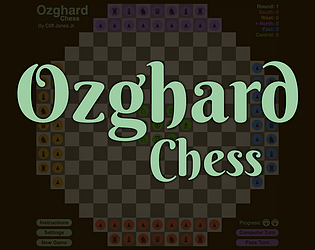 Ozghard Chess
A chess variant for up to five players where there is only a single king in the middle of the board. The goal is to be the first to capture that king or—for the player in the middle—to outlast all the other players. This game is loosely based on my novel The Lasting Lands, coming soon from Frolic Press.
Dig into this project on GitHub. Also available to play for free on Itch.
Visual Effects #
Stroboscope
While doing some research on William S. Burroughs for a short story, I came across this documentary on Brion Gysin’s Dreamachine, a sort of DIY flicker generator used for meditation with the potential to trigger hallucinations. So of course I decided to make my own.
A dark room is recommended, with your eyes closed and the screen fairly close to your forehead. It starts off flashing at a frequency of 10 Hz. Click or tap the screen to cycle between 8 and 16 Hz.
Warning: This kind of flashing is not safe for people with photosensitive epilepsy. Use with caution.
Dig into this project on CodePen.
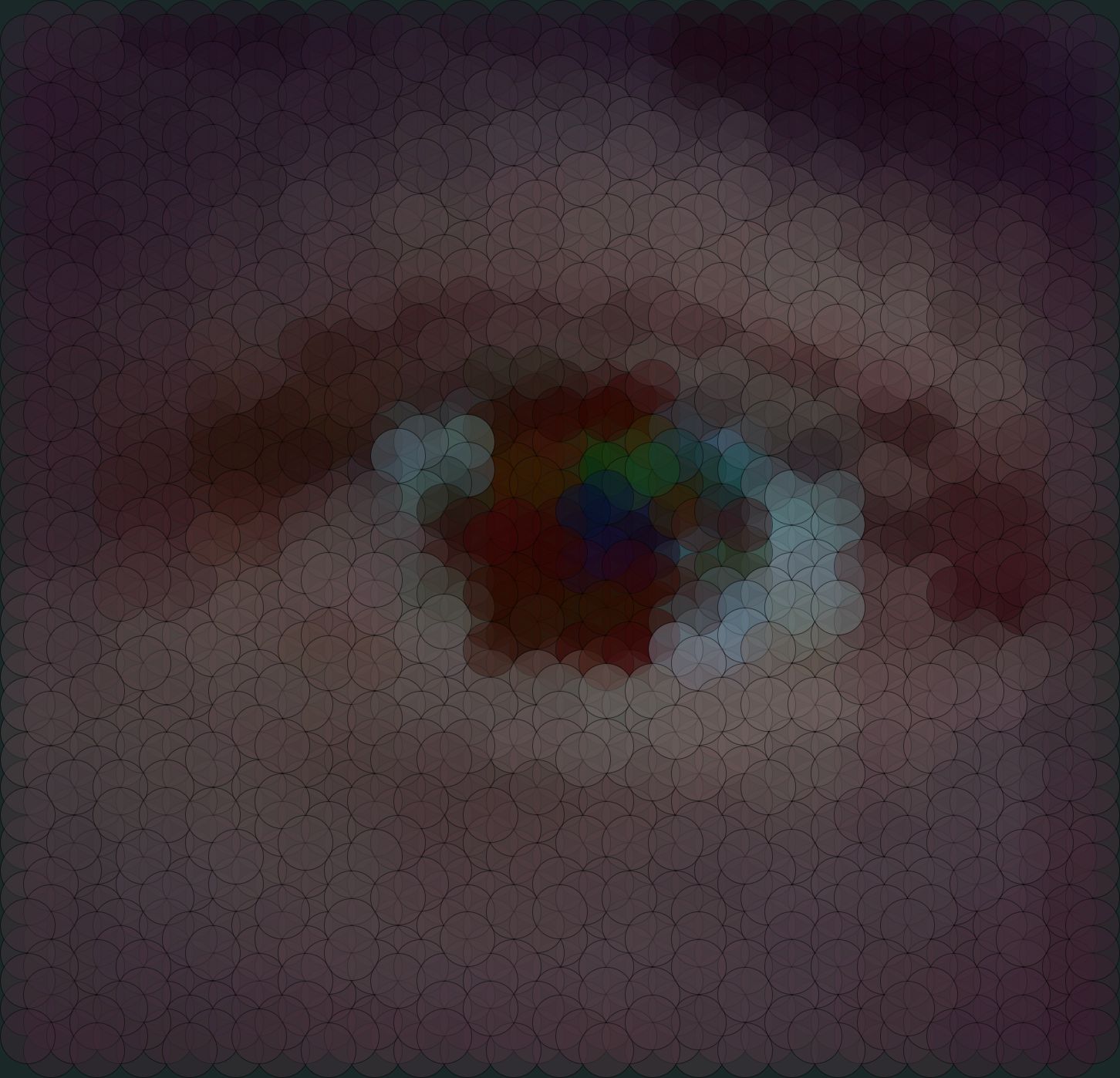 Floravision
I found myself wondering, What if instead of square pixels, we used overlapping circles in a Flower of Life configuration? So I tried it, and it’s mesmerizing.
Making new animations is just a matter of dropping different images onto the page. It’ll work with any images of at least 78 by 75 pixels. Fine detail is lost, of course, but it’s a pretty cool effect, I’d say.
Dig into this project on CodePen.
 Dwitter
My Dwitter feed hosts a variety of trippy canvas-based JavaScript animations, all 140 characters or less! (Don’t look here for good coding style though. It’s all about keeping under that character limit.)
Painting #
Hexagraph
A simple painting tool using overlapping hexagons. They slowly fade, so it’s sort of like Zen water painting. Tap/click and drag your cursor around the screen to paint, and then watch it slowly fade. Use your browser’s back button to exit.
Dig into this project on CodePen.
 Key Painter
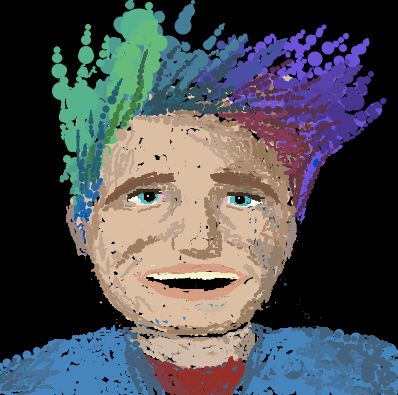
This is a fun little app I put together for Khan Academy that lets you paint with your mouse while selecting colors with your keyboard. Colors can be blended and adjusted in real time.
Language #
Neologizer
Neologizer analyzes the structure of words in a given text and uses what it learns to make up new words. You may find a practical use for such neologizing (filler text, brand naming, etc.), but mostly it’s just fun.
POLLI
This Practically Organic Language Learning Instrument is a command-line language acquisition simulator. The more input it receives, the better conversation it makes. The code is in Python, so you can download it and run it from the command line.
Geometric Phoenician
This is a very simple, logical writing system I developed that corresponds to the original 22 sounds of the Phoenician alphabet (a.k.a. Old Hebrew, Proto-Sinaitic, etc.). In my version, we have 20 consonants (with an implied neutral vowel) and two stand-alone vowels, so this is technically more of an abugida than a true alphabet. Anyhow, it looks cool as heck!
Cipher Lesson
This is a simple introductory programming lesson I designed for use with my daughter, who was about eight at the time. Each line is commented with a number corresponding to the steps outlined in the opening comment.
 Phonological Features as Overlapping Elements
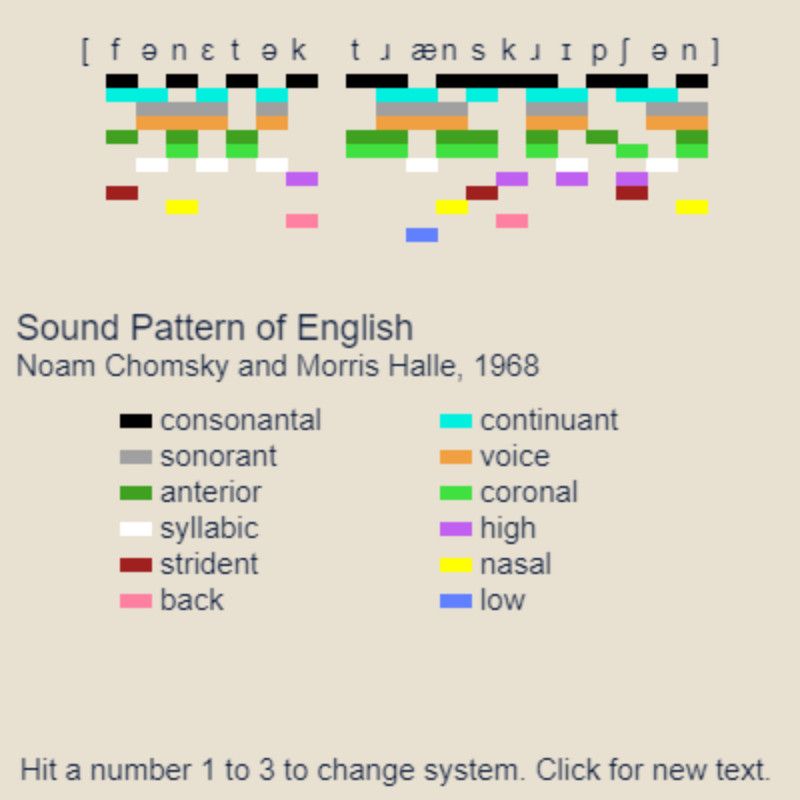
This is my contribution to Khan Academy’s linguistics section. Several methods of phonological analysis are illustrated in parallel, including my own system, which I developed while working on my master’s thesis.